
How It Works
Heat collected outside. Hot water stored inside.
Heat-pump water heating moves heat from the air into your water. Smart Solar takes that heat from outside your home — then stores the heated water in a larger indoor tank, ready when you need it.
The result is efficient water heating without blowing cold air into your home.
Three simple steps
Collect heat outdoors
Even on a cold winter night, outdoor air contains usable heat. Smart Solar’s exterior panel collects that heat day or night, without direct sunlight — even at temperatures down to −20°F.
Move that heat into the water
Refrigerant carries the collected heat to the heat pump, which raises its temperature and transfers it into your water.
Store more hot water
The efficiently heated water is stored in a larger indoor tank, giving your household more hot water already heated and ready to use. Smart Solar does most of its heating during the warmest hours, when the outdoor panel is working at its best.
Why collect the heat outside?
A conventional hybrid water heater pulls heat from the room around it and blows cooled air back into your home. During the heating season, your home’s heating system will have to replace some of that lost heat. Smart Solar leaves your indoor heat where it belongs and collects its energy outdoors instead.
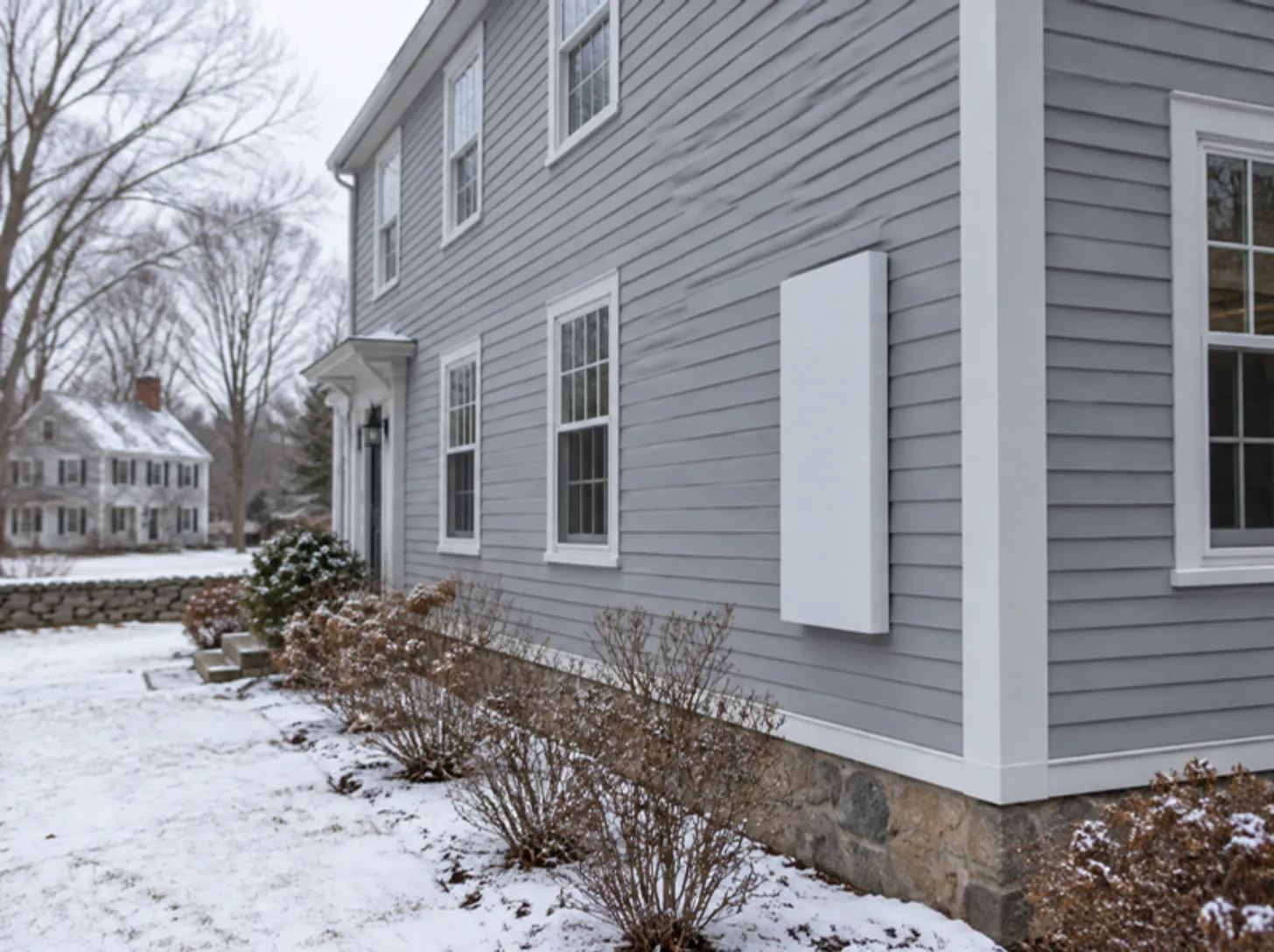
Mounts on any outside wall
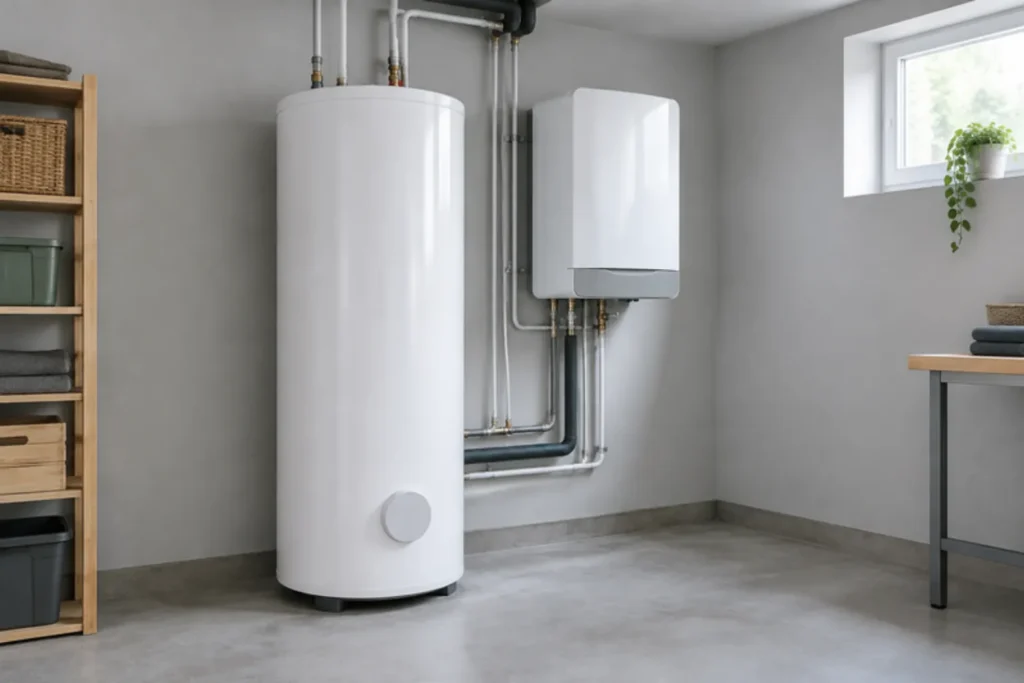
Why separate components matter
A conventional hybrid water heater stacks the heat pump on top of the tank in a single appliance. That limits how large the tank can be. Smart Solar separates the two, so the tank can be sized for your household instead of for the equipment sitting on it. Smart Solar is available with 65-, 80- and 119-gallon storage tanks. We match the tank to your household. The separate architecture also makes long-term service simpler. In the unlikely event of a failure, the affected component can be repaired or replaced without removing the entire system.
Designed for Massachusetts homes and winters
Smart Solar’s exterior panel collects heat from the outdoor air in every season — even at night and at temperatures down to −20°F. Because the panel doesn’t require direct sunlight, placement is flexible. It can usually be mounted on a side or rear wall, on a chimney or tucked behind landscaping.

How it compares
Smart Solar versus a conventional hybrid water heater
Both technologies use a heat pump to heat water efficiently. The fundamental difference is where they collect heat and how the system is built.
|
Feature |
Smart Solar |
Conventional hybrid water heater |
|---|---|---|
|
Heat source |
Outdoor air |
Air inside your home |
|
Effect indoors |
Leaves indoor heat inside |
Blows cooled air into the room |
|
Indoor fan noise |
None |
Uses an indoor fan |
|
Indoor condensation |
None |
Requires a drain or pump |
|
Hot-water storage |
65-, 80- or 119-gallon tank |
80-gallon maximum |
|
Space requirements |
Works well in finished basements and smaller rooms |
Requires sufficient indoor air or ducting |
|
Long-term service |
Components serviced separately |
Combined into one appliance |
|
Leak protection |
Whole-home Phyn protection available |
Some models detect leaks only at the water heater |
|
Equipment cost |
Higher |
Lower |
|
Power source |
120-volt for the heat pump, with optional 240-volt backup |
240-volt |
The efficiency of a heat pump — without turning your home into its heat source.
Ready for a better water heater?
Most homeowners get a firm, fully installed price without a home visit.